How to Sleep Fast in 5 Minutes: Proven Techniques That Actually Work
Share
Key Takeaways
Master these science-backed techniques to fall asleep faster and transform your nightly struggle into peaceful rest.
- Practice the 4-7-8 breathing method: Inhale for 4 counts, hold for 7, exhale for 8 to activate your parasympathetic nervous system and reduce anxiety.
- Use paradoxical intention when struggling: Try to stay awake instead of forcing sleep to eliminate performance anxiety that keeps you alert.
- Optimize your sleep environment: Keep bedroom temperature between 60-67°F and dim lights one hour before bed to support natural melatonin production.
- Follow the 15-20 minute rule: If you can't fall asleep within 20 minutes, get out of bed and do low-stimulus activities until drowsiness returns.
- Combine multiple techniques for best results: Layer breathing exercises with visualization or progressive muscle relaxation to accelerate your body's transition to sleep.
The key is consistency over perfection—practice these methods regularly rather than expecting immediate results. Your nervous system needs time to learn these new patterns, but with persistence, you can significantly reduce the time it takes to fall asleep and improve your overall sleep quality.
Introduction
You know that frustrating feeling — lying in bed, watching the clock tick by as sleep stays just out of reach. Most healthy adults take around 10 to 20 minutes to fall asleep, but what happens when you're tossing and turning for much longer?
Learning how to sleep fast in 5 minutes might sound too good to be true, but several proven relaxation methods can help you drift off faster, sometimes within just a few minutes. This isn't just about comfort — regularly getting less than six hours of sleep can weaken your immune system and increase your risk of cardiovascular disease.
The good news? You have more control over your sleep than you might think. From breathing techniques that calm your nervous system to mental methods that quiet racing thoughts, there are practical approaches that can help you fall asleep faster and get the rest your body needs.
Let's explore the science behind why sleep sometimes feels so elusive and discover the proven techniques that can help you reclaim peaceful nights.
What's Really Happening When You Can't Fall Asleep Quickly
Your brain doesn't simply flip a switch between wakefulness and sleep. Recent research revealed that falling asleep occurs as a sudden transition rather than a gradual process, with scientists now able to predict the exact moment of sleep onset with 98% accuracy. This discovery helps explain why learning to fall asleep in minutes requires specific techniques that work with your body's natural processes.
Your Nervous System Needs Time to Shift
Sleep requires your autonomic nervous system to shift gears entirely. During wakefulness, your sympathetic nervous system keeps you alert and ready for action. For sleep to occur, your parasympathetic nervous system must take over, slowing your heart rate, lowering blood pressure, and reducing peripheral vascular resistance.
This shift involves intricate brain chemistry that happens behind the scenes. Sleep-promoting cells in your hypothalamus and brain stem produce GABA, a chemical that quiets the arousal centers in your brain. At the same time, your brain ramps up melatonin production when it senses darkness, signaling your body to prepare for rest.
Here's where it gets interesting — caffeine blocks adenosine, a chemical that builds up during wakefulness and creates that drowsy feeling. This is why that afternoon coffee can still affect your sleep hours later, directly interfering with your natural sleep drive.
Common Barriers That Keep You Awake
Several factors can prevent your nervous system from making this crucial shift. Stress tops the list, keeping your mind spinning with worries about work, health, money, or family. Major life events like illness, divorce, or job loss can create persistent sleep difficulties that linger long after the initial stress.
Other common barriers include:
- Poor sleep habits: Inconsistent bedtimes, late-day naps, or excessive pre-bedtime activity disrupts your internal clock
- Screen exposure: Computers, smartphones, and TVs emit blue light that hijacks your sleep cycle and delays melatonin production
- Stimulants: Coffee, tea, cola, nicotine, and even alcohol prevent deeper sleep stages and cause middle-of-the-night awakenings
- Environmental factors: Rooms that are too hot, too cold, or filled with noise create physical discomfort that blocks sleep
- Mental health conditions: Anxiety disorders and depression significantly disrupt sleep patterns, with early waking often signaling depression
Remember, the optimal bedroom temperature sits between 60-67 degrees Fahrenheit. Eating close to bedtime also works against you, as sleep is when your system should be repairing itself rather than digesting food.
The Science Behind Sleep Onset
Two biological systems control when you fall asleep: circadian rhythms and sleep-wake homeostasis. Your circadian rhythm acts like an internal clock, responding to light cues and controlling melatonin production. Sleep-wake homeostasis tracks your need for sleep, with the drive building stronger every hour you stay awake.
Throughout the day, adenosine accumulates in your blood, making you progressively drowsier. Sleep clears this chemical away, which is why you wake refreshed. When either system gets disrupted, falling asleep becomes difficult.
The actual moment of falling asleep happens suddenly at a clear tipping point — scientists call this bifurcation. While many people assume sleep onset is gradual, brain activity actually shifts abruptly in the final minutes before sleep, creating that familiar sensation of "falling asleep". Sleep onset latency of 15 to 20 minutes indicates little or no sleep debt, while 5 to 10 minutes suggests concerning sleep deprivation.
Your brain transitions from producing low-amplitude, high-frequency electrical activity to high-amplitude, low-frequency activity as cortical cells synchronize. Heart rate drops, slow eye movements begin, and conscious awareness fades. Understanding this transition explains why techniques to fall asleep fast work by accelerating these natural processes rather than forcing sleep to happen.
What Are Proven Breathing and Relaxation Techniques to Sleep Fast?
Now that we understand why falling asleep can be challenging, it's time to explore practical solutions. Breathing and relaxation techniques work by activating your parasympathetic nervous system, signaling your body to shift from alertness to rest. These methods provide practical ways to fall asleep faster when practiced consistently.
The 4-7-8 Breathing Method
Dr. Andrew Weil developed this technique based on pranayama, an ancient yogic breathing practice. The method involves a specific breathing pattern that reduces heart rate and blood pressure while activating your parasympathetic system.
Here's how to practice it:
- Sit with your back straight or lie down in bed
- Place your tongue against the ridge behind your upper front teeth and keep it there throughout
- Exhale completely through your mouth, making a whooshing sound
- Close your mouth and inhale quietly through your nose for 4 counts
- Hold your breath for 7 counts
- Exhale forcefully through your mouth for 8 counts, making a whooshing sound
- Repeat this cycle 3 more times for a total of 4 breath cycles
The ratio of 4:7:8 matters more than the actual time spent on each phase[133]. If holding your breath feels difficult, count faster while maintaining the ratio. Beginners may experience mild lightheadedness as the body adjusts to slower breathing[133]. With consistent practice, this technique can help you fall asleep faster by reducing anxiety and calming racing thoughts.
Progressive Muscle Relaxation
Dr. Edmund Jacobson developed progressive muscle relaxation (PMR) in the 1920s based on the principle that physical relaxation naturally produces mental calmness. The American Academy of Sleep Medicine rated it an effective treatment for chronic insomnia.
PMR involves tensing each muscle group for 5 to 10 seconds while inhaling, then releasing the tension completely while exhaling. Start with your feet and work upward through calves, thighs, buttocks, abdomen, back, shoulders, arms, hands, neck, jaw, and forehead. Hold each tension briefly, then give yourself 10 to 20 seconds to relax before moving to the next muscle group.
This technique helps you identify where tension accumulates in your body and trains you to release it. The focused attention creates a meditative state that diverts your mind from worries.
The Military Sleep Method
Olympic coach Bud Winter developed this technique for U.S. Navy pilots, claiming that 96% of pilots could fall asleep within 10 minutes after six weeks of practice. The method combines progressive muscle relaxation, deep breathing, and visualization.
Start by relaxing your entire face, including your forehead, eyes, cheeks, jaw, and tongue. Drop your shoulders and let your arms fall to your sides. Take a deep breath to relax your chest, then progressively relax your legs from thighs down to feet. Clear your mind for 10 seconds by visualizing a calming scene or repeating "don't think".
While no studies have specifically validated the two-minute claim, the technique combines well-researched relaxation methods that activate your parasympathetic nervous system.
Counting Breaths to Quiet Your Mind
For particularly busy minds, counting breaths offers a simple anchor. Breathe naturally and count "one" on your inhale, "two" on your exhale, continuing up to ten before starting over. If you lose track, gently begin again at one. This technique gives your brain just enough focus without requiring complex instructions when you're already tired.
What Are Mental Techniques That Can Help You Fall Asleep Faster?
Sometimes your body is ready for sleep, but your mind keeps racing. Mental techniques offer a different approach — instead of focusing on physical relaxation, these methods work by redirecting the thought patterns that keep you alert.
Visualization and Guided Imagery
Visualization works by engaging all your senses in peaceful, imagined scenes. When you picture the sights, sounds, smells, and sensations of a calming place, your brain naturally shifts away from analytical thinking toward the dreamy state that comes before sleep. Research shows that guided imagery helps manage stress and promotes calm by triggering your body's natural response to thoughts.
Try this: Picture yourself lying under a canopy of stars on a warm summer night. Feel the soft grass beneath you and a gentle breeze across your face. Your mind becomes absorbed in this peaceful scenario, naturally reducing heart rate and releasing tension.
The Paradoxical Intention Method
This technique might sound backwards, but it's surprisingly effective. Instead of trying to fall asleep, you deliberately attempt to stay awake. Paradoxical intention removes the performance anxiety that often makes sleep more elusive when you're trying to force it.
Developed by psychiatrist Viktor Frankl and rooted in cognitive behavioral therapy, this method proves both effective and free of side effects. Sleep expert Professor Colin Espie explains that trying to control sleep usually interferes with it, but paradoxical intention allows sleep to occur naturally.
The practice is simple: lie in bed with your eyes open and focus on remaining awake. Go to bed only when you feel genuinely sleepy, keep your room dark, and maintain consistency for several nights to see results.
Cognitive Shuffle Technique
Cognitive scientist Luc Beaudoin developed this method to interrupt the mental processes — worrying, planning, problem-solving — that keep your brain alert. The technique mimics the scattered, disconnected thought patterns your brain naturally creates when drifting toward sleep.
Here's how it works: Choose a neutral word like "cake," then visualize different objects starting with each letter. For C: car, carrot, cottage. For A: apple, ant. A 2016 study of 154 university students found this approach as effective as journaling for improving sleepiness. Sleep specialist Alanna Hare calls cognitive shuffling "super somnolent" because it pulls you toward sleep while quieting intrusive worries. The randomness prevents your brain from making connections or getting bored.
The 5-4-3-2-1 Grounding Method
When anxious thoughts spiral, grounding techniques can redirect your attention to the present moment. This method works backward through your senses: identify 5 things you see, 4 things you touch, 3 things you hear, 2 things you smell, and 1 thing you taste.
The exercise activates your parasympathetic nervous system and breaks the anxiety loops that interfere with sleep. Focus on each sense deliberately — the texture of your pillowcase, the sound of distant traffic, the faint scent of your laundry detergent. This creates mental space away from the worries that keep you awake.
Remember, these mental techniques work best when practiced regularly. Your mind, like your body, needs time to learn these new patterns for winding down.
What About Your Sleep Environment?
You've learned powerful breathing techniques and mental methods, but sometimes the problem isn't in your head — it's in your room. Your sleep environment plays a huge role in how quickly you can fall asleep, and small adjustments can make a significant difference.
Keep Your Bedroom Cool
Your bedroom temperature can make or break your sleep. Set your thermostat between 60 and 67 degrees Fahrenheit for the best results. Here's why this matters: your core body temperature naturally drops by up to 2 degrees during sleep, and a cooler room helps this process along.
Temperatures above 70°F can disrupt your REM sleep and keep you stuck in lighter sleep stages. On the flip side, rooms below 60°F force your body to work overtime generating warmth, which creates stress that interferes with sleep.
A warm shower before bed can actually help you feel drowsier afterward — the cool-down effect that follows promotes natural sleepiness.
Manage Light and Sound
Light exposure has a powerful effect on your sleep-wake cycle. Dim your lights about an hour before bed to help your body start producing melatonin. Those screens you're probably looking at right now? They emit blue light that delays melatonin release and tricks your brain into thinking it's still daytime.
If you absolutely must use devices before bed, try blue light blocking glasses to minimize the disruption. For your evening lighting, choose warm-colored bulbs in the 2000-4000K range — cooler tones above 5000K can actually increase alertness when you're trying to wind down. Blackout curtains or an eye mask can help block any external light sources.
When it comes to sound, you have options. Pink noise like ocean waves or gentle rain can reduce brain wave activity and promote better sleep. White noise works well for masking disruptive sounds from traffic or neighbors. Remember, everyone's different — some people sleep best in complete silence.
Create a Simple Pre-Sleep Routine
Establish an electronic curfew one to two hours before bedtime. This gives your mind time to shift gears. Stick to consistent sleep and wake times to help regulate your body's internal clock.
Choose calming activities for your wind-down time: reading something light, gentle stretching, or listening to soft music all work well.
Foods and Supplements That Support Sleep
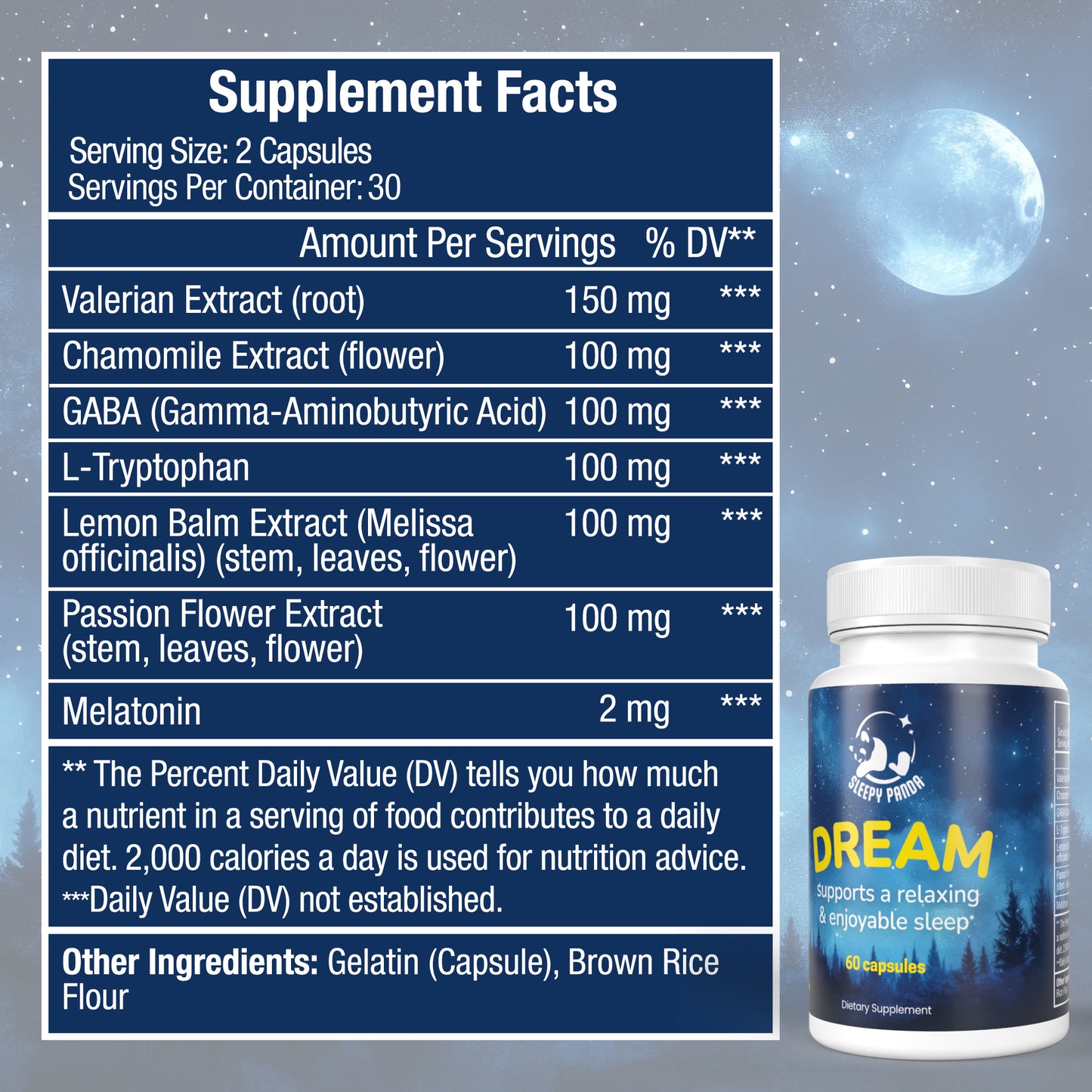
Certain natural ingredients can help your body ease into sleep more efficiently. Melatonin helps regulate your sleep-wake cycle, reducing the time it takes to fall asleep and supporting longer, more restful sleep. GABA works to calm the nervous system, helping quiet a racing mind at night. Meanwhile, chamomile and passion flower provide gentle, plant-based relaxation—helping your body unwind and transition into deeper, more restorative sleep naturally.
You can also get sleep-supporting nutrients from food. Turkey and almonds contain tryptophan, while tart cherry juice and pistachios provide natural melatonin. Bananas and spinach offer magnesium. The key is timing — consume these foods 2-3 hours before bed for the best effect.
What to Do When You Still Can't Fall Asleep
Even with the best techniques, some nights just don't cooperate. You've tried the breathing methods, attempted the mental exercises, but sleep still feels impossible. When this happens, your strategy needs to change completely.
Stop Trying to Force Sleep
Here's a rule that might surprise you: if you can't fall asleep within 15 to 20 minutes, get out of bed. This isn't giving up — it's protecting your sleep in the long run.
Lying awake creates a negative association between your bed and wakefulness, essentially teaching your body that the bed is a place for staying alert. The longer you lie there frustrated, the more anxiety builds, making sleep even more elusive. Instead, move to another area with dim lighting where you can do quiet activities until you feel genuinely drowsy again.
Low-Stimulus Activities to Try
The key is choosing activities that are boring enough to encourage sleep without being stimulating. Read something genuinely dull — not that thriller you've been putting off. Try gentle stretching, quiet meditation, or soft music [331]. Simple puzzles like solitaire, crosswords, or adult coloring books can occupy your mind without energizing you. Some people find counting backward from 300 by 3 surprisingly effective.
What should you avoid? Screens of any kind, since blue light can reset your circadian clock. Skip eating, caffeinated drinks, or checking the time repeatedly. Exercise at night acts like drinking coffee — it's the last thing you want when trying to wind down.
When to Seek Professional Help
Sometimes sleep issues require more than self-help techniques. If sleep problems persist longer than 3 weeks or happen most nights, it's time to contact a healthcare provider. Chronic insomnia — defined as lasting 3 months with difficulties three or more nights weekly — needs professional evaluation.
Watch for warning signs that suggest underlying sleep disorders: gasping during sleep, restless legs, waking up exhausted despite a full night's rest, or daytime problems that affect your work performance [353]. Sleep specialists can identify underlying conditions and recommend treatments that address the root cause of your sleep struggles.
Remember, persistent sleep problems aren't a personal failure — they're often signs that your body needs additional support to find its natural rhythm again.
Final Thoughts
Sleep doesn't have to be an elusive goal that leaves you frustrated night after night. You now have a toolkit of proven techniques — from the 4-7-8 breathing method to visualization and environmental adjustments — that work with your body's natural relaxation response.
Remember, consistency matters more than perfection. These methods become more effective with regular practice, so be patient with yourself as your nervous system learns these new patterns. Small improvements in your sleep onset time can make a significant difference in how you feel each morning.
Your sleep environment plays a crucial role too. Keep your bedroom between 60-67 degrees, dim those lights an hour before bed, and create a calming pre-sleep routine that signals your body it's time to rest.
If you've tried these approaches consistently for three weeks and sleep problems persist, don't hesitate to reach out to a healthcare professional. Sometimes underlying sleep disorders need specialized treatment, and there's no shame in seeking help.
Your sleep is worth prioritizing — it affects everything from your immune system to your daily energy levels. Tonight can be the start of better rest, and your wellness journey toward peaceful sleep begins with the first technique you choose to try.
Key Takeaways
Master these science-backed techniques to fall asleep faster and transform your nightly struggle into peaceful rest.
- Practice the 4-7-8 breathing method: Inhale for 4 counts, hold for 7, exhale for 8 to activate your parasympathetic nervous system and reduce anxiety.
- Use paradoxical intention when struggling: Try to stay awake instead of forcing sleep to eliminate performance anxiety that keeps you alert.
- Optimize your sleep environment: Keep bedroom temperature between 60-67°F and dim lights one hour before bed to support natural melatonin production.
- Follow the 15-20 minute rule: If you can't fall asleep within 20 minutes, get out of bed and do low-stimulus activities until drowsiness returns.
- Combine multiple techniques for best results: Layer breathing exercises with visualization or progressive muscle relaxation to accelerate your body's transition to sleep.
The key is consistency over perfection—practice these methods regularly rather than expecting immediate results. Your nervous system needs time to learn these new patterns, but with persistence, you can significantly reduce the time it takes to fall asleep and improve your overall sleep quality.
FAQ's On How to Sleep Fast in 5 Minutes
Q: Can you really fall asleep in 5 minutes or less?
A: Yes, it's possible to fall asleep within 5 minutes using specific relaxation techniques like the 4-7-8 breathing method, progressive muscle relaxation, or the military sleep method. While the average person takes 10-20 minutes to fall asleep, consistent practice of these techniques can significantly reduce your sleep onset time. However, results vary by individual, and some methods require several weeks of regular practice to become most effective.
Q: What is the 4-7-8 breathing technique and does it work?
A: The 4-7-8 breathing method involves inhaling through your nose for 4 counts, holding your breath for 7 counts, and exhaling through your mouth for 8 counts. This pattern activates your parasympathetic nervous system, which reduces heart rate and blood pressure while promoting relaxation. The ratio matters more than the actual time spent on each phase, and with consistent practice, this technique can help you fall asleep faster by reducing anxiety and calming racing thoughts.
Q: Why do some people fall asleep instantly while others struggle?
A: The ability to fall asleep quickly depends on several factors including physical exhaustion, stress levels, sleep habits, and individual biology. People who fall asleep rapidly are often physically tired from daily activity, have established consistent sleep routines, and don't struggle with anxiety or racing thoughts at bedtime. Additionally, your nervous system needs to shift from alertness to rest mode, and some people's bodies make this transition more easily than others.
Q: What should I do if I can't fall asleep after 20 minutes?
A: If you can't fall asleep within 15-20 minutes, get out of bed and move to another area with low lighting. Lying awake creates a negative association between your bed and wakefulness. Engage in relaxing, low-stimulus activities like reading something boring, gentle stretching, or listening to soft music until drowsiness returns. Avoid screens, eating, or checking the time, as these activities can further delay sleep.
Q: What's the ideal bedroom temperature for falling asleep quickly?
A: The optimal bedroom temperature for sleep is between 60-67 degrees Fahrenheit. Your core body temperature naturally drops by up to 2 degrees during sleep, and a cooler room facilitates this process. Temperatures above 70°F can disrupt REM sleep and keep you in lighter sleep stages, while rooms below 60°F may force your body to work harder to generate warmth, creating stress that interferes with sleep.
References
https://www.calm.com/blog/how-to-sleep-fast-in-5-minutes
https://www.helpguide.org/wellness/sleep/how-to-fall-asleep-fast-tips-to-get-to-sleep-quickly
https://www.amahahealth.com/blog/how-to-sleep-fast-in-5-minutes-proven-techniques-from-therapist/
https://www.medicalnewstoday.com/articles/how-to-fall-asleep-fast
https://www.openaccessgovernment.org/scientists-reveal-the-exact-moment-your-brain-switches-off-to-sleep/200501/
https://www.ukdri.ac.uk/news-and-events/scientists-uncover-how-brain-falls-asleep
https://www.thejcn.com/DOIx.php?id=10.3988/jcn.2022.18.2.140
https://www.ninds.nih.gov/health-information/public-education/brain-basics/brain-basics-understanding-sleep
https://www.hopkinsmedicine.org/health/wellness-and-prevention/the-science-of-sleep-understanding-what-happens-when-you-sleep
https://www.hopkinsmedicine.org/health/conditions-and-diseases/sleepwake-cycles
https://www.mayoclinic.org/diseases-conditions/insomnia/symptoms-causes/syc-20355167
https://www.nhs.uk/conditions/insomnia/
https://www.nhs.uk/every-mind-matters/mental-wellbeing-tips/how-to-fall-asleep-faster-and-sleep-better/
https://www.unitypoint.org/news-and-articles/why-cant-i-fall-asleep